Are Your Roofing Components Outdated?
This article explores some of the components of an older roofing system that are outdated by today’s standards.


This article explores some of the components of an older roofing system that are outdated by today’s standards.
A strong roofing system is more than just the shingles. It all starts with wood decking, which is protected by an Ice & Water Shield and an underlayment. Other components, including vents, pipe boots, drip edges, flashing, caulking, and even gutters, can all contribute to the lifespan of the system.
Think of it like this: your roof is a system like your body. Each component of the roof is like an organ. If one component fails, it can significantly impact the health of the entire system.
L&S Home Improvements frequently inspects older homes in Southeast Michigan, and we notice many outdated components that not only contribute to the roofing system’s degradation but also don’t comply with Michigan’s residential code.
If you have an older home (built before 1980), these components are likely outdated:

Role in the System: Keeping air moving in and out of the attic
Your home should have two types of vents: exhaust and intake. We discuss vents in more detail here.
Our team sees quite a few outdated vents, including:
Additionally, some older homes have a baffling number of small roof vents that seem scattered without rhyme or reason, largely due to a predated idea of ventilation that no longer meets today’s standards.

We mentioned modern ventilation earlier, but what does that mean?
Industry best practices change over time, and for the roofing industry, there is a baseline standard to follow: the 1:150 rule, which requires a minimum of 1 square foot of net-free ventilation for every 150 square feet of attic floor space.
Ventilation systems must be balanced, meaning there are equal numbers of intake and exhaust vents in the roofing system. At L&S Home Improvements, we use continuous ridge vents and soffit vents with insulation baffles, which don’t block airflow and prevent rain and snow infiltration.
Additionally, some older homes feature different exhaust vents, like ridge vents and box vents, or ridge vents and power ventilators, on the same roof. This is definitely not something we recommend doing anymore (by modern standards), as it creates competing exhaust points. In these scenarios, air will take the path of least resistance, causing some vents to pull outside air in rather than push hot, moist air from the attic.

Role in the System: Weatherproofing
Your home has plumbing vent pipes that penetrate through the roof deck and shingles. Without pipe boots, there would be an open gap around the pipe and shingles, increasing the risk of water intrusion. Pipe boots have a metal base flange that integrates with the surrounding shingles and is designed to shed water, with a flexible boot that wraps around the pipe to protect it from wind-driven rain.
Newer pipe boots feature reinforced EPDM or TPE collars with greater UV resistance, compared to older pipe boots with rubber compounds that degrade faster.
Additionally, many older homes in Michigan have:
Other problems we’ve seen include cement or caulking plastered around the base of the pipe, which temporarily stops leaks but isn’t a permanent solution, as that cement or caulking will crack and shrink over time. Older homes also have improperly sized boots, meaning there are visible gaps between the collar and the pipe, which we’ve sometimes seen filled with caulking or cement.

Role in the System: Water shed
We’ve included this on here not because drip edges age fast, but because many older roofs don’t actually have them. Michigan’s current residential code requires drip edges installed at both eaves and rakes to ensure water is directed away from the fascia and decking.
Role in the System: Weather protection
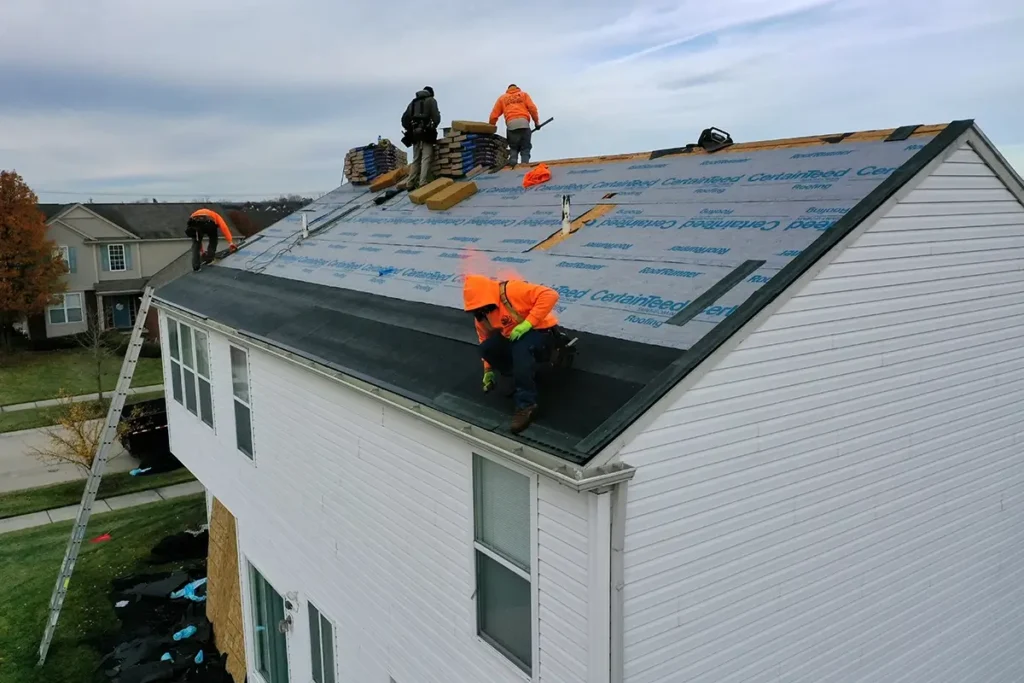
Similar to drip edges, it’s normal for older homes not to have an Ice & Water Shield installed before the underlayment. For L&S, Ice & Water Shields are standard for all residential roof installations. These shields are adhered to vulnerable areas, particularly the eaves (bottom edge of the roof), where it’s common for ice dams to form. We also install Ice & Water Shields under the roof’s valley (V-shaped channels) flashing because they carry more water than other parts of the roof. We also install them around transition areas, step flashing locations, rake edges (sloped parts of the roof), and penetration points, such as pipe boots, roof vents, and, if a home has them, chimneys or skylights.
Without an Ice & Water Shield, your home is more susceptible to damage from ice dams and water infiltration, especially if you have a complex roof design featuring multiple peaks and valleys.
Role in the System: Weather protection
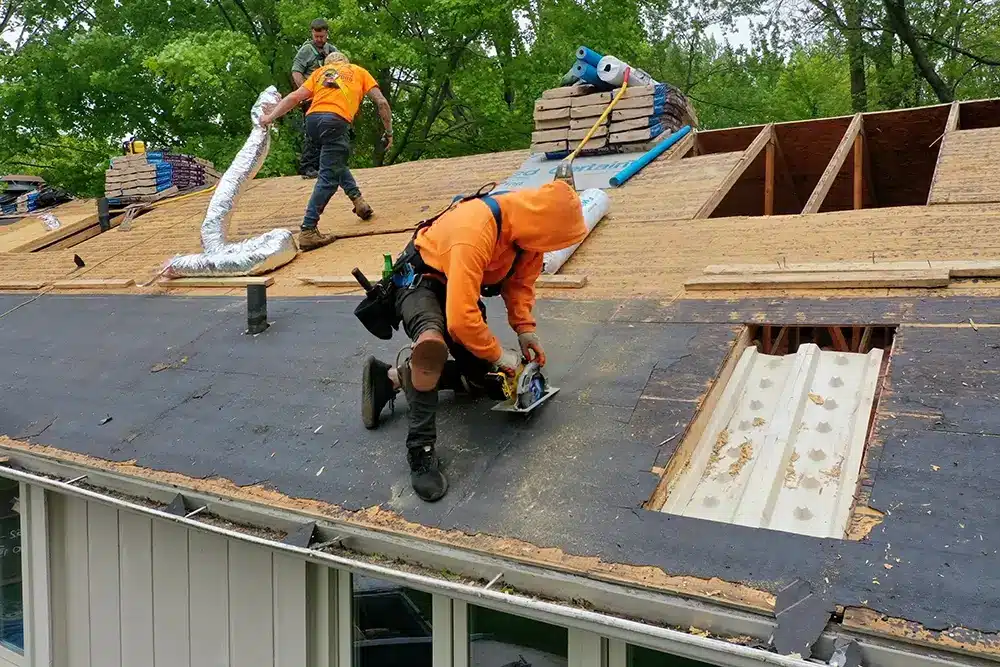
If you’ve ever seen shingles blown off a roof after a windstorm, you’ve seen a roof’s underlayment. Modern underlayment is made from synthetic materials and is installed on the roof decking to prevent water damage. Older homes may have had felt paper (15# or 30# underlayment) because it was the standard. However, these felt materials degrade much, much faster compared to synthetic ones.
We recommend having your roof inspected if it was installed before the mid-2000s because the underlayment beneath your shingles, even if your shingles are still functioning as they should, may have started to degrade.

Role in the System: Preventing water infiltration
Flashing should be installed around chimneys, skylights, roof-to-wall intersections, and in valleys to help prevent water infiltration, and in the case of valley flashing, to steer water off the roof.
L&S Home Improvements installs aluminum flashing, which is today’s industry standard. In the past, galvanized steel and tin were standard, which corrode, crack, or separate over time. If you’ve noticed corrosion or cracking in your flashing, it’s a sign that your flashing is failing and needs to be replaced with aluminum or copper flashing, which will last much longer than galvanized steel.

Role in the System: Leak protection
Caulking is always installed around skylights, flashing, and other penetration points susceptible to water intrusion. Older homes were sealed with roof cement or oil-based caulks. Roof cement still exists, but it can shrink, crack, and trap moisture against flashing, causing ugly, thick, black, cracked mounds. Oil-based caulks also harden and crack, but eventually turn into a chalky, crumbling mess.
Your roofing system should be sealed with a polymer-based sealant that’s flexible and can better withstand thermal expansion, so it won’t crack over time from temperature fluctuations.
Role in the System: Water management
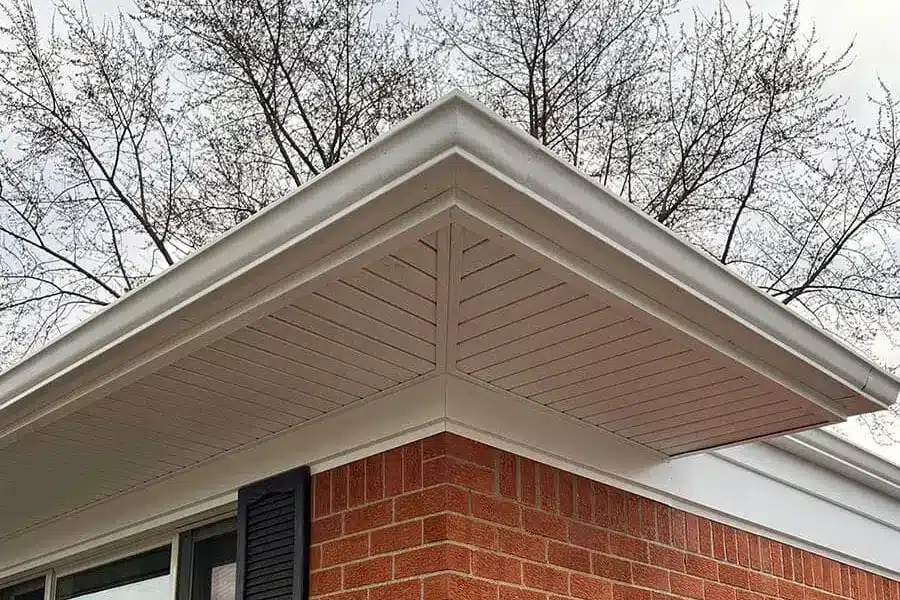
While gutters aren’t technically part of the roofing system, they do contribute to the roof’s lifespan by directing water away from the home. Traditional/seamed gutters were installed with spike-and-ferrule attachment systems, which loosen over time and cause the gutters to pull away from the fascia, especially during heavy rain events or when/if ice dams form.
We recommend upgrading to seamless gutters because they are custom-made, don’t feature seams or joints, and are installed with screws instead of spike/ferrules. By eliminating seams, the risk of leaks and clogs is reduced.
We don’t expect any homeowner to know if they need roofing components replaced. In fact, we don’t recommend homeowners getting on their roofs at all without prior experience, especially if your roof has a high pitch or you have a multi-story home.
Michigan storm season is only just beginning, and if you haven’t had your roof inspected yet, now is the time.
L&S Home Improvements has over 75 years of combined roofing experience and offers roof replacement, roof repairs, and gutter installations. Visit our website to learn more about our work and customer dedication, or contact us today to schedule a free, unbiased inspection.